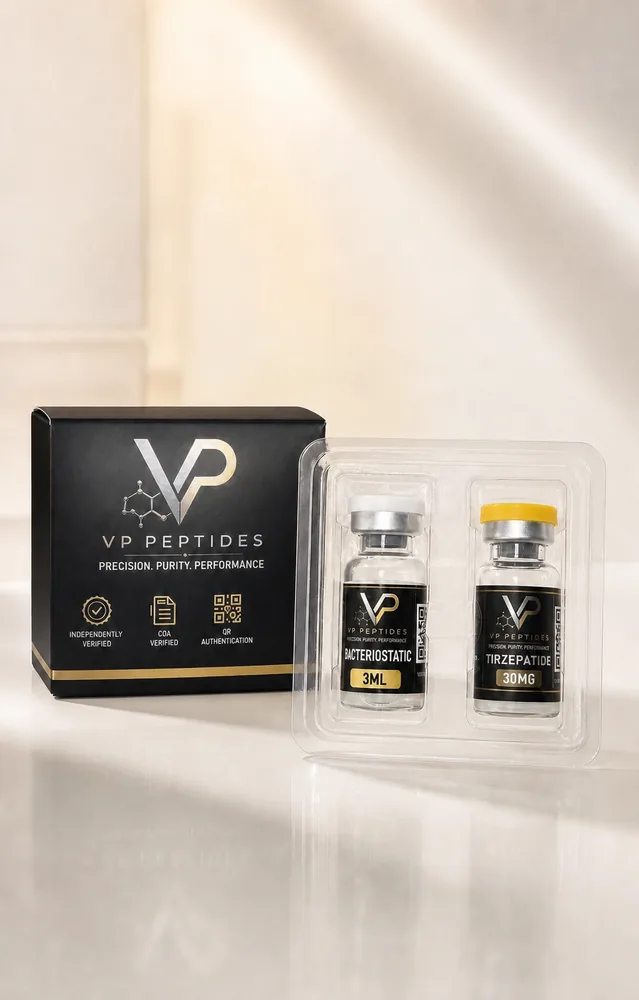
* Approved as a drug in its branded form; the research-grade compound offered here is not that approved product and is supplied for laboratory research use only.
Dual GIP/GLP-1 receptor agonist that mimics two incretin hormones.
+ Mechanism & research focus
Research focus
- Blood-glucose regulation and insulin response
- Appetite signaling and body-weight studies
- Lipid and cardiometabolic markers
- Obstructive sleep apnea research (clinical trial)
- Cardiovascular-outcomes research (ongoing trial)
Regulatory note
Approved only within authorized medicines; unapproved versions are not equivalent to the branded product.
Chemical identifiers
Selected references
Triple agonist at GIP, GLP-1 and glucagon receptors.
+ Mechanism & research focus
Research focus
- Obesity and body-composition research
- Energy expenditure and metabolic rate
- Hepatic fat and glucose markers
- Hepatic-fat reduction in fatty-liver models (clinical trial)
- Renal function and inflammation markers (preclinical)
Regulatory note
Remains investigational; no approval for marketing or human use.
Chemical identifiers
Selected references
GLP-1 receptor agonist that regulates glucose metabolism and appetite signaling.
+ Mechanism & research focus
Research focus
- Blood-glucose regulation and insulin response
- Appetite and satiety signaling research
- Cardiometabolic and weight-management studies
- Cardiovascular event-reduction research (clinical trial)
- Kidney-outcome studies across risk categories (clinical trial)
Regulatory note
Approved only within authorized medicines; unapproved versions are not equivalent to the branded product.
Chemical identifiers
Selected references
Long-acting insulin-like growth factor-1 analog with reduced binding-protein affinity.
+ Mechanism & research focus
Research focus
- Cell growth and proliferation signaling
- Anabolic / muscle-tissue pathways (in vitro & animal)
- Glucose uptake and metabolism
- Bone mineral density and skeletal remodeling (preclinical)
- Cardioprotective signaling in ischemic models (preclinical)
Regulatory note
Not approved for human administration.
Selected references
Selective ghrelin-receptor (GHS-R) agonist and GH secretagogue.
+ Mechanism & research focus
Research focus
- Pulsatile growth-hormone release
- Endocrine signaling models
- Bone and body-composition research (preclinical)
- Bone-density research (preclinical osteoporosis model)
- GI-motility research (clinical trials)
Regulatory note
Not approved for therapeutic use.
Chemical identifiers
Selected references
GHRH analog paired with a ghrelin-receptor agonist to study synergistic GH release.
+ Mechanism & research focus
Research focus
- Combined GH / IGF-1 axis stimulation
- Sleep and recovery signaling (preclinical)
- Comparative endocrine research
- Synergistic pulsatile GH-secretion pharmacodynamics
- Sustained IGF-1 elevation research
Regulatory note
Not an approved product.
Chemical identifiers
Selected references
Stabilized GHRH analog that stimulates endogenous growth hormone.
+ Mechanism & research focus
Research focus
- Visceral adipose tissue (approved indication: HIV-associated lipodystrophy)
- GH / IGF-1 axis modulation
- Metabolic and cognitive research
- Liver-fat and NASH histology research (clinical trials)
- Executive-function studies in older adults (clinical trial)
Regulatory note
Other uses or presentations require independent regulatory evaluation.
Chemical identifiers
Selected references
GHRH(1-29) analog that stimulates the pituitary to release growth hormone.
+ Mechanism & research focus
Research focus
- GH / IGF-1 axis modulation (preclinical & clinical history)
- Sleep architecture and recovery signaling
- Comparative endocrine research vs. other secretagogues
- Slow-wave sleep enhancement research (human studies)
- Somatopause and adult GH-decline research
Regulatory note
Previously marketed as an approved medicine in some markets; current research supply is not an approved pharmaceutical product.
Chemical identifiers
Selected references
Potent synthetic GH-secretagogue hexapeptide.
+ Mechanism & research focus
Research focus
- GH release and IGF-1 signaling
- Cardiovascular / cardioprotection models
- Ghrelin-receptor pharmacology
- CD36-receptor-mediated cardioprotection (preclinical)
- Comparative GH-secretagogue potency pharmacology
Regulatory note
Not approved for human use.
Chemical identifiers
Selected references
Orally active ghrelin-receptor agonist and GH secretagogue — a non-peptide compound.
+ Mechanism & research focus
Research focus
- Pulsatile growth-hormone and IGF-1 release
- Lean-mass and body-composition research
- Sleep-quality studies (preclinical & early clinical)
- REM-sleep research (clinical studies)
- Bone-turnover markers in postmenopausal models (clinical trial)
Regulatory note
Not approved for human use; should be identified as a non-peptide compound.
Chemical identifiers
Selected references
Modified C-terminal (176-191) fragment of human growth hormone.
+ Mechanism & research focus
Research focus
- Lipolysis and fat metabolism (preclinical)
- Cartilage and joint-repair studies
- Metabolic markers
- Clinical-trial history in obesity research
- Non-GH-receptor lipolytic mechanism studies
Regulatory note
Not approved as a weight-management drug.
Chemical identifiers
Selected references
Synthetic fragment corresponding to GH's lipolytic region.
+ Mechanism & research focus
Research focus
- Adipose-tissue lipolysis (animal models)
- Fat metabolism studied without GH's glucose effects
- Body-composition research
- Beta-3-adrenergic-receptor-dependent fat oxidation (preclinical)
- DEXA-confirmed body-composition research (animal models)
Regulatory note
Has no approved indication.
Chemical identifiers
Selected references
Pentadecapeptide derived from a gastric protective protein.
+ Mechanism & research focus
Research focus
- Tendon, ligament and muscle repair (animal models)
- Gut and mucosal healing
- Angiogenesis and growth-factor signaling
- Bone-fracture healing research (preclinical)
- Spinal-cord injury and motor-recovery models (preclinical)
Regulatory note
Human clinical evidence is limited; not approved.
Chemical identifiers
Selected references
Synthetic fragment of thymosin β4, an actin-regulating peptide.
+ Mechanism & research focus
Research focus
- Cell migration and wound healing
- Angiogenesis and tissue regeneration
- Cardiac and injury-repair models (preclinical)
- Corneal wound-healing research (human trials, full-length thymosin β4)
- Satellite-cell muscle-regeneration signaling (preclinical)
Regulatory note
Not approved for human use in products sold as TB-500.
Chemical identifiers
- Thymosin β4 / Timbetasin (full-length — the substance commercially sold as “TB-500”): CAS 77591-33-4 · C212H350N56O78S · 4963.00 g/mol · PubChem CID 16132341
- TB-500 (PubChem synonym — short acetylated fragment Ac-LKKTETQ-OH): CAS 885340-08-9 · C38H68N10O14 · 889.00 g/mol · PubChem CID 62707662
Selected references
Copper-binding tripeptide (glycyl-L-histidyl-L-lysine) present in plasma.
+ Mechanism & research focus
Research focus
- Skin remodeling and collagen (cosmetic research)
- Wound healing and antioxidant activity
- Hair-follicle stimulation studies
- Broad gene-expression modulation research (in vitro)
- Lysyl-oxidase cofactor activity in collagen cross-linking
Regulatory note
Status depends on formulation and route; avoid therapeutic claims without support.
Chemical identifiers
Selected references
A multi-peptide recovery blend combining KPV, GHK-Cu, BPC-157 and TB-500.
+ Mechanism & research focus
Research focus
- Tissue repair and recovery signaling (from BPC-157 & TB-500)
- Skin, collagen and anti-inflammatory pathways (GHK-Cu & KPV)
- Angiogenesis and gut / mucosal-barrier models
- Complementary anti-inflammatory and repair-signaling pathways (component research)
- Shared angiogenesis signaling across blend components
Regulatory note
Supplied lyophilized for laboratory research use only; not approved for human use. A blend does not carry the approval status of any individual component; components are studied individually, not as this combined formulation.
Selected references
A recovery and skin blend combining GHK-Cu, BPC-157 and TB-500.
+ Mechanism & research focus
Research focus
- Tissue repair, angiogenesis and wound-healing signaling
- Skin remodeling and collagen (GHK-Cu)
- Systemic recovery models (preclinical)
- Combined antioxidant and collagen-support research (component research)
- Shared angiogenesis signaling across blend components
Regulatory note
Supplied lyophilized for laboratory research use only; not approved for human use. A blend does not carry the approval status of any individual component; components are studied individually, not as this combined formulation.
Selected references
A recovery combination of BPC-157 and TB-500, two peptides studied for tissue repair.
+ Mechanism & research focus
Research focus
- Tendon, ligament and muscle repair (animal models)
- Angiogenesis and cell migration
- Gut and injury-recovery models
- Complementary tendon-repair mechanisms (component research)
- Shared VEGF-pathway angiogenesis signaling
Regulatory note
Supplied lyophilized for laboratory research use only; not approved for human use. A blend does not carry the approval status of any individual component; components are studied individually, not as this combined formulation.
Selected references
Delta sleep-inducing peptide affecting neuroendocrine signaling.
+ Mechanism & research focus
Research focus
- Sleep architecture and delta-wave research
- Stress-hormone (cortisol) modulation
- Neuroprotection (preclinical)
- GABAergic and serotonergic signaling research
- Indirect opioidergic-pathway studies (preclinical)
Regulatory note
Not approved to treat insomnia, stress or other conditions.
Chemical identifiers
Selected references
Mitochondrial-derived peptide encoded within mtDNA.
+ Mechanism & research focus
Research focus
- Metabolic homeostasis and insulin sensitivity
- Exercise and energy metabolism
- Aging and mitochondrial function
- Post-exercise metabolic signaling (human study)
- Cardiac mitochondrial-respiration research (preclinical)
Regulatory note
Not approved for human use.
Chemical identifiers
Selected references
Mitochondria-targeted tetrapeptide that binds cardiolipin.
+ Mechanism & research focus
Research focus
- Mitochondrial bioenergetics
- Cardiac and skeletal-muscle disease models
- Age-related mitochondrial dysfunction
- Cardiolipin-stabilization mechanism research
- Mitochondrial myopathy research (approved indication: Barth syndrome)
Regulatory note
Regulatory status must be verified per indication and territory.
Chemical identifiers
Selected references
Small-molecule NNMT inhibitor — a non-peptide compound.
+ Mechanism & research focus
Research focus
- NNMT enzyme inhibition and NAD+ metabolism
- Adipocyte energy expenditure (preclinical)
- Metabolic research
- Body-composition research in diet-induced models (preclinical)
- Muscle stem-cell and strength research (preclinical)
Regulatory note
Not approved for human use; should be identified as a non-peptide compound.
Chemical identifiers
Selected references
Neuropeptide that activates KISS1R upstream of GnRH.
+ Mechanism & research focus
Research focus
- Reproductive (HPG) axis signaling
- Fertility and hormone research
- Puberty and endocrine studies
- Pubertal-timing and reproductive-behavior research
- HPA-axis and stress-behavior studies (preclinical)
Regulatory note
Must not be sold with unapproved clinical indications.
Chemical identifiers
Selected references
AMPK-activating nucleoside analog (AICA ribonucleotide).
+ Mechanism & research focus
Research focus
- AMPK pathway and cellular energy sensing
- Glucose uptake and endurance metabolism (animal)
- Prohibited in competitive sport
- Mitochondrial biogenesis via AMPK-PGC-1α signaling
- Diabetic-neuropathy research (preclinical)
Regulatory note
Not approved for performance enhancement; also banned in competitive sport.
Chemical identifiers
Selected references
Essential coenzyme central to redox reactions and cellular energy.
+ Mechanism & research focus
Research focus
- Mitochondrial energy metabolism
- DNA repair via sirtuins and PARPs
- Aging and cellular-stress research
- Sirtuin-activation research (preclinical)
- Age-related NAD+ decline studies (human tissue)
Regulatory note
Longevity or treatment claims require evidence and regulatory compliance.
Chemical identifiers
Selected references
Endogenous tripeptide (Glu-Cys-Gly) and major intracellular antioxidant.
+ Mechanism & research focus
Research focus
- Oxidative-stress and redox balance
- Detoxification enzyme systems (research)
- Cellular metabolism
- Neurodegeneration oxidative-stress research (preclinical)
- Mitochondrial redox-balance studies (in vitro)
Regulatory note
Medical use depends on formulation, route and prescription; avoid unsupported detox promises.
Chemical identifiers
Selected references
Synthetic tetrapeptide (Ala-Glu-Asp-Gly) modeled on epithalamin.
+ Mechanism & research focus
Research focus
- Telomerase activity (in vitro)
- Circadian and pineal (melatonin) regulation
- Aging research
- Pineal-gland and melatonin-biosynthesis research (preclinical)
- Replicative-lifespan (Hayflick limit) studies (in vitro)
Regulatory note
Not approved for rejuvenation or life extension.
Chemical identifiers
Selected references
Mitochondrial-derived peptide encoded within the 16S rRNA region of mtDNA.
+ Mechanism & research focus
Research focus
- Cytoprotection and apoptosis-resistance signaling
- Mitochondrial-nuclear communication research
- Age-related and metabolic-stress models (preclinical)
- Neuroprotection research in amyloid-beta models (in vitro)
- Cardiovascular stress-resistance studies (preclinical)
Regulatory note
Human clinical evidence is limited; not approved for human use.
Chemical identifiers
Selected references
Immunomodulatory peptide from the thymosin family, distinct from thymosin beta-4.
+ Mechanism & research focus
Research focus
- T-cell maturation and immune-response modulation
- Chronic-infection and oncology-adjunct research
- Immune-senescence studies (age-related immune decline)
- Vaccine-response and dendritic-cell activation research
- Chronic viral-infection research (approved indication outside the U.S.)
Regulatory note
Approved as a prescription immune therapy in some countries; not FDA-approved in the U.S.
Chemical identifiers
Selected references
Zinc-dependent thymic peptide hormone involved in T-lymphocyte maturation.
+ Mechanism & research focus
Research focus
- Age-related immune decline ("inflammaging") research
- NF-κB and inflammatory-cytokine modulation (preclinical)
- Cellular-senescence models
- Zinc-cofactor dependency research
- Naive T-cell restoration studies (preclinical)
Regulatory note
Evidence is preclinical (animal models) and not yet demonstrated in humans; not approved for human use.
Chemical identifiers
Selected references
Synthetic ACTH(4-10) analog heptapeptide.
+ Mechanism & research focus
Research focus
- Neuroprotection and BDNF expression
- Cognition, memory and focus (research)
- Stroke / ischemia models
- Cerebral-ischemia recovery research (small clinical studies)
- Intranasal CNS-delivery pharmacokinetic research
Regulatory note
Not FDA-approved for therapeutic use in the U.S.
Chemical identifiers
Selected references
Synthetic analog of the immunopeptide tuftsin.
+ Mechanism & research focus
Research focus
- Anxiolytic and stress research
- GABA / serotonin and neuroimmune modulation
- Cognitive-stability studies
- GABA-A receptor modulation research
- Innate-immune and cytokine-balance studies (preclinical)
Regulatory note
Not FDA-approved for therapeutic use in the U.S.
Chemical identifiers
Selected references
Melanocortin-receptor (MC4R) agonist.
+ Mechanism & research focus
Research focus
- Sexual-arousal pathways (approved indication in premenopausal women)
- Central melanocortin signaling
- Related research uses
- Melanocortin receptor-distribution research (preclinical)
- Autonomic and cardiovascular signaling studies
Regulatory note
Different presentations, concentrations or indications are not automatically equivalent to the approved drug.
Chemical identifiers
Selected references
Nine-amino-acid neuropeptide hormone.
+ Mechanism & research focus
Research focus
- Obstetric uses (approved, clinical)
- Social-bonding and behavior research
- Neuroendocrine signaling
- Pair-bonding behavior research (preclinical)
- Social-cognition and trust studies (human research)
Regulatory note
Must not be promoted for wellbeing, bonding or libido outside an approved medical framework.
Chemical identifiers
Selected references
C-terminal tripeptide of α-MSH (Lys-Pro-Val).
+ Mechanism & research focus
Research focus
- Anti-inflammatory signaling (preclinical)
- Skin and gut-barrier models
- Immune modulation
- NF-κB inhibition mechanism research
- Colitis and inflammatory-bowel research (preclinical)
Regulatory note
Not approved for human use.
Chemical identifiers
Selected references
Tap any compound to open its mechanism and research focus. Content is educational and describes what the
literature studies — it is not a therapeutic claim, efficacy statement or dosing guidance.
“Approved” means the ingredient exists in one or more authorized products; approval belongs to the
specific product, formulation, dose and indication evaluated. Supplied for laboratory research use only.