Home · Research Catalog · SS-31
Longevity & Cellular Research · Research CompoundSS-31 (Elamipretide): Research Overview
Technical profile
| Compound | SS-31 (elamipretide; Szeto-Schiller peptide 31; also referenced as MTP-131) |
|---|---|
| Class | Synthetic tetrapeptide (4 amino acids), C-terminal amide |
| Sequence | D-Arg-2',6'-dimethylTyr-Lys-Phe-NH2 |
| Molecular target studied | Cardiolipin, a phospholipid of the inner mitochondrial membrane |
| Molecular weight | Not stated here — see the batch Certificate of Analysis for the tested specification |
| Form supplied | Lyophilized powder, sealed vial |
| Storage | Lyophilized: 2–8 °C, protected from light. |
| Verification | HPLC purity ≥99%, sterility, endotoxins, heavy metals — documented on the batch COA |
What does the research literature cover?
SS-31 is unusual among research peptides in that it has been carried into a formal clinical development program — elamipretide has been studied in human trials by Stealth BioTherapeutics — while remaining an unapproved investigational agent. The published literature spans:
- Mitochondrial membrane biology: studies describing the peptide's accumulation in the inner mitochondrial membrane and its binding interaction with cardiolipin.
- Cardiolipin and cristae structure: cell and tissue work examining cristae morphology and electron-transport-chain organization in preparations exposed to the peptide.
- Preclinical models of mitochondrial dysfunction: animal studies in cardiac, renal, skeletal-muscle, and ocular tissue models.
- Clinical investigation: registered trials in primary mitochondrial disease and related conditions, conducted under an investigational-drug framework.
Important context: elamipretide is investigational. Being studied in clinical trials is not the same as being approved, and trial programs may report mixed or negative results. SS-31 has no approved human use in any jurisdiction. Summaries here describe what researchers have studied — they are not claims about effects, safety, or efficacy in humans.
Why purity matters for SS-31 research
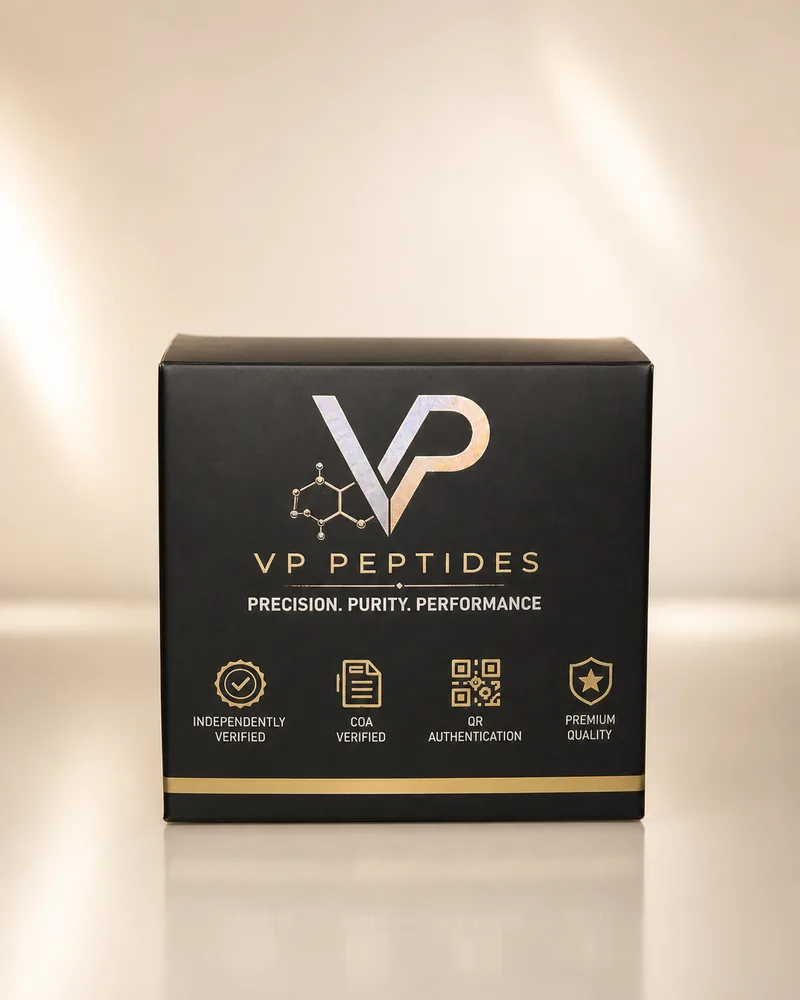
Peptide research results are only as reliable as the material in the vial. SS-31 contains non-standard residues — a D-arginine and a dimethylated tyrosine — so synthesis errors, epimerization, or truncated sequences can produce material that is not the peptide the protocol intends to test. Every VP Peptides SS-31 batch ships with a Certificate of Analysis documenting ≥99% HPLC purity plus sterility, endotoxin and heavy-metal testing from independent third-party testing.
Request catalog accessFrequently asked questions
Is SS-31 the same thing as the drug elamipretide?
SS-31 and elamipretide refer to the same peptide sequence, but they are not the same product. Elamipretide is an investigational pharmaceutical developed under a regulated clinical program with pharmaceutical-grade manufacturing, formulation, and oversight. Research-grade SS-31 supplied here is a laboratory reagent for in-vitro and preclinical work — it is not a pharmaceutical product, is not manufactured to drug standards, and is not intended for any human use.
Is SS-31 approved for human use?
No. Elamipretide has been studied in clinical trials by Stealth BioTherapeutics, but it is not approved by the FDA or any other regulatory agency. Material supplied here is a research chemical only — not a drug, supplement, or food ingredient.
How should SS-31 be stored in the lab?
Lyophilized vials should be kept at 2–8 °C and protected from light.
What does an SS-31 Certificate of Analysis include?
Each batch COA documents HPLC purity against the ≥99% specification, sterility, endotoxin and heavy-metal screening results, along with batch number and test date.
Cardiolipin binding and the investigational record
The mechanistic case for SS-31 (elamipretide) is unusually well defined for a peptide in this category, which is one reason it advanced into regulated clinical study. The tetrapeptide carries an alternating aromatic–cationic motif with a net positive charge, and biophysical work indicates it associates selectively with cardiolipin — the signature anionic phospholipid of the inner mitochondrial membrane that is required for the folding of cristae and for organizing the electron-transport machinery. Reported binding is described as dual in nature: an electrostatic interaction with the phosphate head groups and a hydrophobic interaction with the acyl chains. Studies in ischemic mitochondrial preparations have used this cardiolipin association to account for observations of preserved cristae architecture and re-established membrane function in the laboratory setting.
Because the target lies at the structural core of the organelle, the peptide has been examined preclinically across a range of models of mitochondrial dysfunction, and it has been carried into human clinical trials — sponsored under a regulated development program — in primary mitochondrial myopathy and in cardiac and other rare mitochondrial disorders. Published trial reports include randomized, dose-escalation designs measuring functional and biochemical endpoints.
It is important to distinguish the two statuses here: elamipretide is investigational, meaning it has been formally studied in clinical trials, but it is not approved by the FDA, the EMA, or any other regulatory agency for any indication. Research-grade SS-31 supplied for laboratory work is not the clinical product and is not intended for human use. The summaries above describe the published mechanistic and trial literature and are not claims of safety or efficacy in humans.
Selected research references
- Mitchell et al., J Biol Chem 2020
- Zhu et al., Oxid Med Cell Longev 2022
- Szeto et al., J Am Soc Nephrol 2013 (SS-31 & cardiolipin) — PubMed
- Karaa et al., Neurology 2018 (dose-escalation trial, mitochondrial myopathy) — PubMed
Related research compounds
Inicio · Catálogo de investigación · SS-31
Investigación en longevidad y células · Compuesto de investigaciónSS-31 (Elamipretida): Descripción para investigación
Perfil técnico
| Compuesto | SS-31 (elamipretida; péptido Szeto-Schiller 31; también referenciado como MTP-131) |
|---|---|
| Clase | Tetrapéptido sintético (4 aminoácidos), amida C-terminal |
| Secuencia | D-Arg-2',6'-dimethylTyr-Lys-Phe-NH2 |
| Diana molecular estudiada | Cardiolipina, un fosfolípido de la membrana mitocondrial interna |
| Peso molecular | No se indica aquí — consulte el Certificado de Análisis del lote para la especificación analizada |
| Forma suministrada | Polvo liofilizado, vial sellado |
| Almacenamiento | Liofilizado: 2–8 °C, protegido de la luz. |
| Verificación | Pureza HPLC ≥99%, esterilidad, endotoxinas, metales pesados — documentado en el COA del lote |
¿Qué cubre la literatura de investigación?
SS-31 es inusual entre los péptidos de investigación porque ha sido llevado a un programa formal de desarrollo clínico — la elamipretida ha sido estudiada en ensayos en humanos por Stealth BioTherapeutics — sin dejar de ser un agente en investigación no aprobado. La literatura publicada abarca:
- Biología de la membrana mitocondrial: estudios que describen la acumulación del péptido en la membrana mitocondrial interna y su interacción de unión con la cardiolipina.
- Cardiolipina y estructura de las crestas: trabajos en células y tejidos que examinan la morfología de las crestas y la organización de la cadena de transporte de electrones en preparaciones expuestas al péptido.
- Modelos preclínicos de disfunción mitocondrial: estudios en animales en modelos de tejido cardíaco, renal, muscular esquelético y ocular.
- Investigación clínica: ensayos registrados en enfermedad mitocondrial primaria y afecciones relacionadas, realizados bajo un marco de fármaco en investigación.
Contexto importante: la elamipretida está en investigación. Ser estudiada en ensayos clínicos no es lo mismo que estar aprobada, y los programas de ensayos pueden reportar resultados mixtos o negativos. SS-31 no tiene uso humano aprobado en ninguna jurisdicción. Los resúmenes aquí describen lo que los investigadores han estudiado — no son afirmaciones sobre efectos, seguridad o eficacia en humanos.
Por qué importa la pureza en la investigación con SS-31
Los resultados de la investigación con péptidos son tan fiables como el material del vial. SS-31 contiene residuos no estándar — una D-arginina y una tirosina dimetilada — por lo que errores de síntesis, epimerización o secuencias truncadas pueden producir un material que no es el péptido que el protocolo pretende evaluar. Cada lote de SS-31 de VP Peptides se envía con un Certificado de Análisis que documenta una pureza HPLC ≥99% más pruebas de esterilidad, endotoxinas y metales pesados realizadas por terceros independientes.
Solicitar acceso al catálogoPreguntas frecuentes
¿Es SS-31 lo mismo que el fármaco elamipretida?
SS-31 y elamipretida se refieren a la misma secuencia peptídica, pero no son el mismo producto. La elamipretida es un fármaco en investigación desarrollado bajo un programa clínico regulado con fabricación, formulación y supervisión de grado farmacéutico. El SS-31 de grado investigación suministrado aquí es un reactivo de laboratorio para trabajo in vitro y preclínico — no es un producto farmacéutico, no se fabrica según estándares de fármacos y no está destinado a ningún uso humano.
¿Está SS-31 aprobado para uso humano?
No. La elamipretida ha sido estudiada en ensayos clínicos por Stealth BioTherapeutics, pero no está aprobada por la FDA ni por ninguna otra agencia reguladora. El material suministrado aquí es únicamente un producto químico de investigación — no es un fármaco, suplemento ni ingrediente alimentario.
¿Cómo debe almacenarse SS-31 en el laboratorio?
Los viales liofilizados deben mantenerse a 2–8 °C y protegidos de la luz.
¿Qué incluye un Certificado de Análisis de SS-31?
Cada COA de lote documenta la pureza HPLC frente a la especificación de ≥99%, los resultados de esterilidad, endotoxinas y detección de metales pesados, junto con el número de lote y la fecha de análisis.
Unión a la cardiolipina y el registro en investigación
El fundamento mecanístico del SS-31 (elamipretida) está inusualmente bien definido para un péptido de esta categoría, lo que es una de las razones por las que avanzó a un estudio clínico regulado. El tetrapéptido presenta un motivo alternante aromático–catiónico con carga neta positiva, y el trabajo biofísico indica que se asocia selectivamente con la cardiolipina — el fosfolípido aniónico característico de la membrana mitocondrial interna, necesario para el plegamiento de las crestas y para organizar la maquinaria de transporte de electrones. La unión reportada se describe como de naturaleza dual: una interacción electrostática con los grupos de cabeza de fosfato y una interacción hidrofóbica con las cadenas acilo. Estudios en preparaciones mitocondriales isquémicas han utilizado esta asociación con la cardiolipina para explicar observaciones de arquitectura de crestas preservada y función de membrana restablecida en el entorno de laboratorio.
Dado que la diana se sitúa en el núcleo estructural del orgánulo, el péptido se ha examinado de forma preclínica en diversos modelos de disfunción mitocondrial, y se ha llevado a ensayos clínicos en humanos — patrocinados bajo un programa de desarrollo regulado — en miopatía mitocondrial primaria y en trastornos cardíacos y otros trastornos mitocondriales raros. Los informes de ensayos publicados incluyen diseños aleatorizados de escalada de dosis que miden criterios de valoración funcionales y bioquímicos.
Es importante distinguir aquí los dos estados: la elamipretida es investigacional, es decir, ha sido estudiada formalmente en ensayos clínicos, pero no está aprobada por la FDA, la EMA ni ninguna otra agencia reguladora para ninguna indicación. El SS-31 de grado investigación suministrado para trabajo de laboratorio no es el producto clínico y no está destinado a uso humano. Los resúmenes anteriores describen la literatura mecanística y de ensayos publicada y no son afirmaciones de seguridad o eficacia en humanos.
Referencias de investigación seleccionadas
- Mitchell et al., J Biol Chem 2020
- Zhu et al., Oxid Med Cell Longev 2022
- Szeto et al., J Am Soc Nephrol 2013 (SS-31 y cardiolipina) — PubMed
- Karaa et al., Neurology 2018 (ensayo de escalada de dosis, miopatía mitocondrial) — PubMed