Home · Research Catalog · DSIP
Cognitive ResearchDSIP: Research Overview
Technical profile
| Compound | DSIP (delta sleep-inducing peptide) |
|---|---|
| Class | Nonapeptide (9 amino acids) |
| Sequence | Trp-Ala-Gly-Gly-Asp-Ala-Ser-Gly-Glu |
| Sequence origin | First isolated from rabbit cerebral venous blood in 1977 |
| Molecular weight | ~848.8 g/mol (approximate) |
| Regulatory status | Not an approved drug in any jurisdiction |
| Form supplied | Lyophilized powder, sealed vial |
| Storage | Lyophilized: 2–8 °C, protected from light. |
| Verification | HPLC purity ≥99%, sterility, endotoxins, heavy metals — documented on the batch COA |
What does the research literature cover?
DSIP is one of the older compounds in this category, and the shape of its literature reflects that. Most of the published work dates from the late 1970s through the 1990s, and the findings across laboratories are inconsistent. Studies have examined the peptide in the context of:
- Sleep-architecture models: animal experiments using EEG recording to characterize slow-wave and delta-band activity, the observations that gave the peptide its name.
- Stress-response models: studies measuring hormonal and behavioral markers in animals under experimental stressors.
- Peptide distribution and stability: work characterizing the molecule's short plasma half-life and its detection across tissues.
Honest framing matters here: the DSIP literature is old, comparatively small, and mixed. Several groups were unable to reproduce the original sleep-related observations, and the peptide's endogenous role remains unresolved in the published record. There is no approved human use in any jurisdiction. Summaries here describe what researchers have studied — including the negative and inconclusive results — and are not claims about effects in humans.
Why purity matters for DSIP research
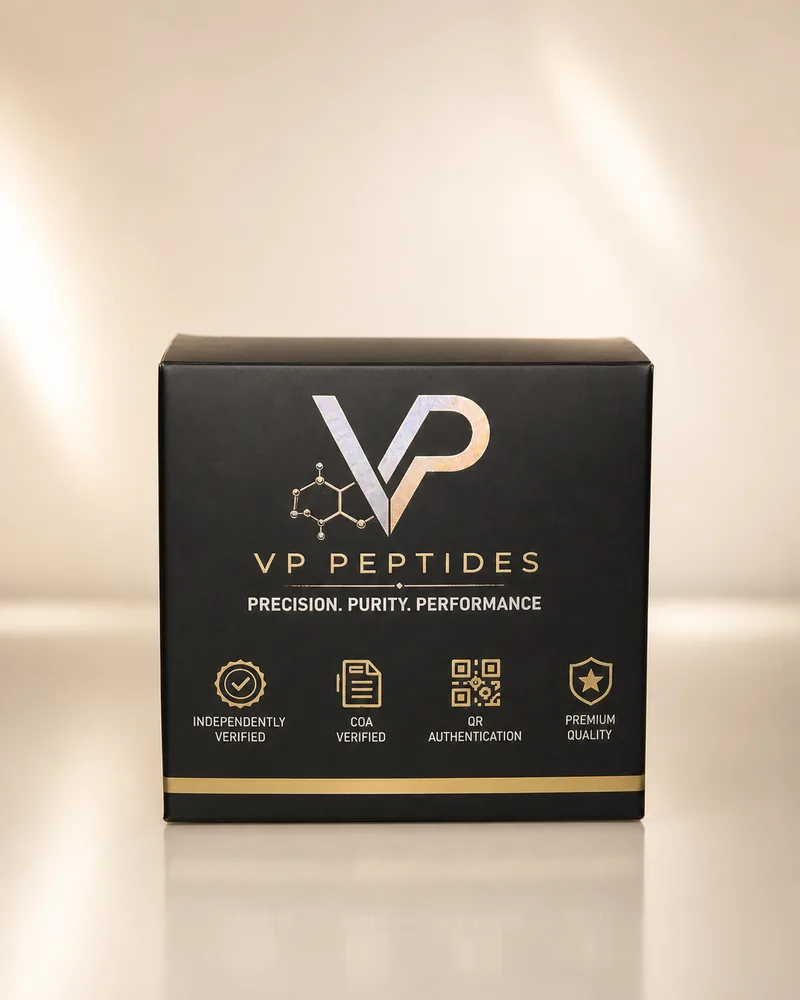
With a literature this heterogeneous, material quality is one of the few variables a laboratory can fully control. Truncated or deamidated sequences and endotoxin contamination make already-inconsistent findings harder to interpret. Every VP Peptides DSIP batch ships with a Certificate of Analysis documenting ≥99% HPLC purity plus sterility, endotoxin and heavy-metal testing from independent third-party testing.
Request catalog accessFrequently asked questions
Is DSIP approved for human use?
No. DSIP is not approved by the FDA, the EMA, or any other regulatory agency for human use. It is supplied strictly as a research chemical for in-vitro and laboratory investigation. It is not a drug, supplement, or food ingredient.
Why is the DSIP literature described as mixed?
The peptide was named for observations in early animal experiments, but subsequent studies across different laboratories reported inconsistent results, and some were unable to reproduce the original findings. Much of the corpus predates modern methodological standards and sample sizes, so the published record is best read as unsettled rather than established.
What does a DSIP Certificate of Analysis include?
Each batch COA documents HPLC purity (≥99% specification), sterility, endotoxin and heavy-metal screening results, along with batch number and test date.
How should DSIP be stored in the lab?
Lyophilized vials should be kept at 2–8 °C and protected from light.
Mechanistic and neuroendocrine research directions
Beyond the sleep-architecture experiments that gave the peptide its name, part of the DSIP literature has tried to characterize how the molecule interacts with the central nervous system at a mechanistic level. Investigators reported a saturable, high-affinity transport process for DSIP across the blood–brain barrier in perfused-brain preparations, a result used to argue that the nonapeptide can reach central sites rather than acting only in the periphery. Other preclinical work probed neuroendocrine signaling: DSIP has been described as modulating somatostatin release through a dopaminergic pathway in animal tissue, and several groups examined possible interactions with adrenergic transmission and with hormonal axes governing corticosteroid output.
Findings across these neuroendocrine studies were not uniform. At least one controlled human investigation reported no measurable effect of the peptide on CRH- and meal-stimulated ACTH and cortisol secretion, illustrating how difficult the signal has been to isolate. The human sleep record is similarly unsettled: double-blind studies in insomnia and disturbed-sleep populations were conducted in the 1980s and early 1990s, and their conclusions diverged, with some reporting changes in sleep timing or continuity while others detected little.
Taken together, this body of work is best read as a set of exploratory mechanistic and physiological observations rather than a settled account of what DSIP does, and the peptide's endogenous function remains an open question in the published record. None of these findings has translated into an approved therapeutic use, and DSIP is not authorized as a drug in any jurisdiction. The summaries here describe published research questions and outcomes — including null results — and are not statements about effects in humans.
Selected research references
- Mu et al., Front Pharmacol 2024
- Graf & Kastin, Neurosci Biobehav Rev 1984 (DSIP: a review) — PubMed
- Graf & Kastin, Peptides 1986 (DSIP: an update) — PubMed
- Schneider-Helmert et al., double-blind insomnia study 1992 — PubMed
Related research compounds
Inicio · Catálogo de investigación · DSIP
Investigación cognitivaDSIP: Descripción general de investigación
Perfil técnico
| Compuesto | DSIP (péptido inductor del sueño delta) |
|---|---|
| Clase | Nonapéptido (9 aminoácidos) |
| Secuencia | Trp-Ala-Gly-Gly-Asp-Ala-Ser-Gly-Glu |
| Origen de la secuencia | Aislado por primera vez de la sangre venosa cerebral de conejo en 1977 |
| Peso molecular | ~848.8 g/mol (aproximado) |
| Estado regulatorio | No es un fármaco aprobado en ninguna jurisdicción |
| Forma suministrada | Polvo liofilizado, vial sellado |
| Almacenamiento | Liofilizado: 2–8 °C, protegido de la luz. |
| Verificación | Pureza HPLC ≥99%, esterilidad, endotoxinas, metales pesados — documentado en el COA del lote |
¿Qué cubre la literatura de investigación?
El DSIP es uno de los compuestos más antiguos de esta categoría, y la forma de su literatura lo refleja. La mayor parte del trabajo publicado data de finales de la década de 1970 hasta la de 1990, y los hallazgos entre laboratorios son inconsistentes. Los estudios han examinado el péptido en el contexto de:
- Modelos de arquitectura del sueño: experimentos en animales con registro EEG para caracterizar la actividad de ondas lentas y de banda delta, las observaciones que le dieron nombre al péptido.
- Modelos de respuesta al estrés: estudios que miden marcadores hormonales y conductuales en animales bajo estresores experimentales.
- Distribución y estabilidad del péptido: trabajos que caracterizan la corta semivida plasmática de la molécula y su detección en distintos tejidos.
Un marco honesto importa aquí: la literatura del DSIP es antigua, comparativamente reducida y dispar. Varios grupos no lograron reproducir las observaciones originales relacionadas con el sueño, y el papel endógeno del péptido permanece sin resolver en el registro publicado. No existe un uso humano aprobado en ninguna jurisdicción. Los resúmenes aquí describen lo que los investigadores han estudiado — incluidos los resultados negativos e inconclusos — y no son afirmaciones sobre efectos en humanos.
Por qué importa la pureza en la investigación con DSIP
Con una literatura tan heterogénea, la calidad del material es una de las pocas variables que un laboratorio puede controlar por completo. Las secuencias truncadas o desamidadas y la contaminación por endotoxinas dificultan aún más la interpretación de hallazgos ya de por sí inconsistentes. Cada lote de DSIP de VP Peptides se envía con un Certificado de Análisis que documenta una pureza HPLC ≥99% además de pruebas de esterilidad, endotoxinas y metales pesados realizadas por terceros independientes.
Solicitar acceso al catálogoPreguntas frecuentes
¿Está el DSIP aprobado para uso humano?
No. El DSIP no está aprobado por la FDA, la EMA ni ninguna otra agencia reguladora para uso humano. Se suministra estrictamente como un producto químico de investigación para estudios in vitro y de laboratorio. No es un fármaco, suplemento ni ingrediente alimentario.
¿Por qué se describe la literatura del DSIP como dispar?
El péptido recibió su nombre por observaciones en experimentos animales tempranos, pero estudios posteriores en distintos laboratorios reportaron resultados inconsistentes, y algunos no lograron reproducir los hallazgos originales. Gran parte del corpus es anterior a los estándares metodológicos y tamaños de muestra modernos, por lo que el registro publicado se interpreta mejor como no resuelto que como establecido.
¿Qué incluye un Certificado de Análisis de DSIP?
Cada COA de lote documenta la pureza HPLC (especificación ≥99%), los resultados del cribado de esterilidad, endotoxinas y metales pesados, junto con el número de lote y la fecha de análisis.
¿Cómo debe almacenarse el DSIP en el laboratorio?
Los viales liofilizados deben mantenerse a 2–8 °C y protegidos de la luz.
Direcciones mecanísticas y neuroendocrinas de investigación
Más allá de los experimentos sobre arquitectura del sueño que dieron nombre al péptido, parte de la literatura del DSIP ha intentado caracterizar cómo interactúa la molécula con el sistema nervioso central a nivel mecanístico. Los investigadores describieron un proceso de transporte saturable y de alta afinidad para el DSIP a través de la barrera hematoencefálica en preparaciones de cerebro perfundido, un resultado empleado para sostener que el nonapéptido puede alcanzar sitios centrales en lugar de actuar solo en la periferia. Otros trabajos preclínicos exploraron la señalización neuroendocrina: se ha descrito que el DSIP modula la liberación de somatostatina a través de una vía dopaminérgica en tejido animal, y varios grupos examinaron posibles interacciones con la transmisión adrenérgica y con ejes hormonales que gobiernan la producción de corticosteroides.
Los hallazgos en estos estudios neuroendocrinos no fueron uniformes. Al menos una investigación humana controlada no reportó ningún efecto medible del péptido sobre la secreción de ACTH y cortisol estimulada por CRH y por las comidas, lo que ilustra lo difícil que ha sido aislar la señal. El registro sobre el sueño humano está igualmente sin resolver: en las décadas de 1980 y principios de 1990 se realizaron estudios doble ciego en poblaciones con insomnio y sueño alterado, y sus conclusiones divergieron, con algunos reportando cambios en el horario o la continuidad del sueño y otros detectando poco.
En conjunto, este cuerpo de trabajo se interpreta mejor como un conjunto de observaciones mecanísticas y fisiológicas exploratorias que como una descripción establecida de lo que hace el DSIP, y la función endógena del péptido sigue siendo una pregunta abierta en el registro publicado. Ninguno de estos hallazgos se ha traducido en un uso terapéutico aprobado, y el DSIP no está autorizado como fármaco en ninguna jurisdicción. Los resúmenes aquí describen preguntas y resultados de investigación publicados — incluidos los resultados nulos — y no son afirmaciones sobre efectos en humanos.
Referencias de investigación seleccionadas
- Mu et al., Front Pharmacol 2024
- Graf & Kastin, Neurosci Biobehav Rev 1984 (DSIP: una revisión) — PubMed
- Graf & Kastin, Peptides 1986 (DSIP: una actualización) — PubMed
- Schneider-Helmert et al., estudio doble ciego en insomnio 1992 — PubMed