Home · Research Catalog · Sermorelin
Growth-Factor Research · Secretagogue ClassSermorelin: Research Overview
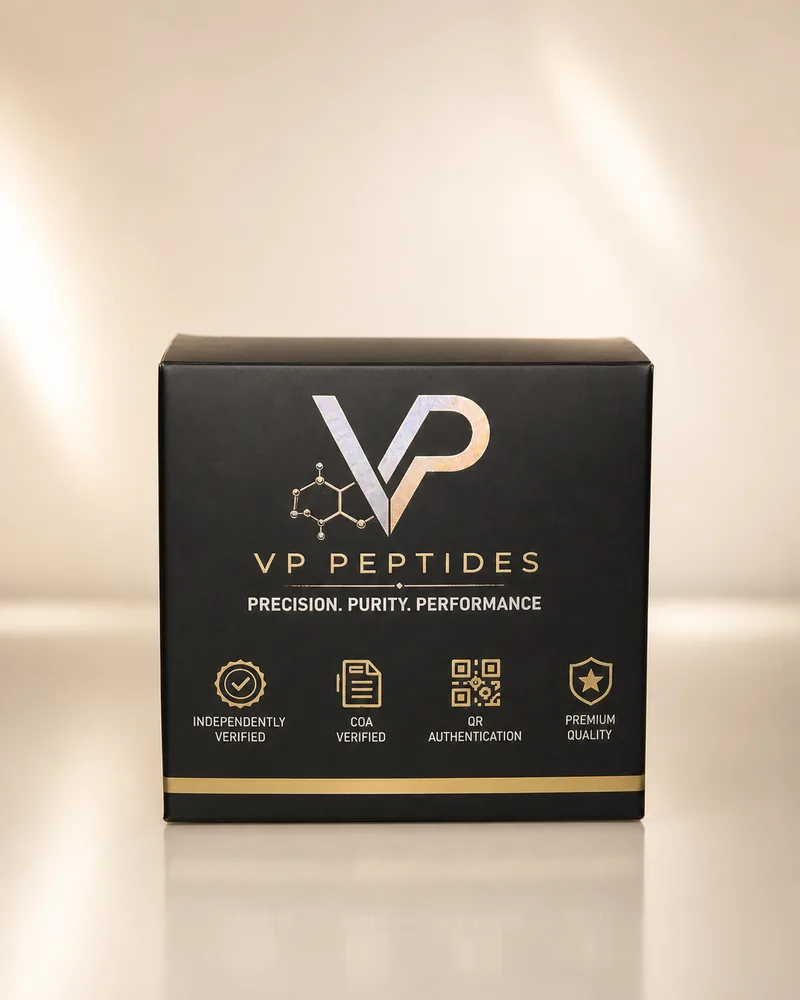
Technical profile
| Compound | Sermorelin (GHRH(1-29); GRF(1-29)) |
|---|---|
| Class | Synthetic 29-amino-acid GHRH analog |
| Molecular weight | ~3357.9 g/mol |
| Receptor target | GHRH receptor |
| Form supplied | Lyophilized powder, sealed vial |
| Storage | Lyophilized: 2–8 °C, protected from light. |
| Verification | HPLC purity ≥99%, sterility, endotoxins, heavy metals — documented on the batch COA |
What does the research literature cover?
Sermorelin is one of the most established reference compounds in GHRH research: the GHRH(1-29) fragment has been characterized in the literature for decades. Published work has examined it in the context of:
- GHRH-receptor pharmacology: GHRH(1-29) as the minimal fragment retaining full receptor activity, making sermorelin a standard tool compound for GHRH-receptor studies.
- Growth-hormone-axis models: laboratory studies of GHRH-receptor signaling and pulsatile axis regulation.
- Comparative analog studies: designs comparing the unmodified GHRH(1-29) fragment with stabilized analogs such as CJC-1295 and full-length analogs such as tesamorelin.
Historical context: sermorelin was formerly marketed as an approved pharmaceutical product (Geref), which was later discontinued commercially. That history concerns a regulated drug product — research-grade sermorelin is not that product and is supplied for laboratory use only.
Why purity matters for sermorelin research
Reference compounds are only useful if they are what the label says. Truncated sequences, deletion impurities, or endotoxin contamination confound receptor-pharmacology assays. Every VP Peptides sermorelin batch ships with a Certificate of Analysis documenting ≥99% HPLC purity, sterility, endotoxin and heavy-metal testing from independent third-party testing.
Request catalog accessFrequently asked questions
Wasn't sermorelin once an approved drug?
Yes — a pharmaceutical form of sermorelin was formerly marketed as the approved product Geref, which was later discontinued commercially. Research-grade sermorelin is not that pharmaceutical product: it is laboratory material supplied for in-vitro and preclinical research only, and it may not be used in humans.
What does a sermorelin Certificate of Analysis include?
Each batch COA documents HPLC purity (≥99% specification), sterility, endotoxin and heavy-metal screening results, along with batch number and test date.
How should sermorelin be stored in the lab?
Lyophilized vials should be kept at 2–8 °C and protected from light.
What is sermorelin's status in competitive sport?
GHRH analogs and growth-hormone secretagogues, including sermorelin, are listed as prohibited substances under the World Anti-Doping Agency (WADA) Prohibited List. This is noted for informational purposes only; VP Peptides materials are supplied solely for laboratory research.
Mechanism and the Geref distinction in the literature
Sermorelin's pharmacology is well mapped in the literature. The molecule is GHRH(1-29)-NH2, the amino-terminal fragment that reviews identify as the shortest sequence retaining full activity at the GHRH receptor. That receptor is a Gs-coupled G-protein-coupled receptor on pituitary somatotrophs; when engaged it raises intracellular cAMP and drives synthesis and pulsatile release of growth hormone. Because sermorelin acts one step upstream — on the releasing-hormone receptor rather than on pituitary output directly — reviews describe its action as operating within the axis's own feedback loop rather than overriding it.
Prakash and Goa, reviewing the compound, catalogued its short plasma half-life (on the order of minutes) and its use as a provocative agent in GHRH-receptor testing. Walker's later review revisited GHRH(1-29) as a model peptide for studying the aging growth-hormone axis, again framing it as a research and diagnostic reference rather than a therapy with outcomes demonstrated here.
The regulatory history matters for accuracy. A pharmaceutical formulation of sermorelin was once an approved product (Geref) before being discontinued commercially, and the peer-reviewed record above largely accompanies or predates that product. Research-grade sermorelin supplied for laboratory work is a distinct material — not the former drug product — and carries no approved human use. Everything summarized here describes GHRH-receptor pharmacology and the published literature, not an effect of the research material in people.
Selected research references
Related research compounds
Inicio · Catálogo de investigación · Sermorelina
Investigación de factores de crecimiento · Clase secretagogosSermorelina: Descripción general para investigación
Perfil técnico
| Compuesto | Sermorelina (GHRH(1-29); GRF(1-29)) |
|---|---|
| Clase | Análogo sintético de GHRH de 29 aminoácidos |
| Peso molecular | ~3357.9 g/mol |
| Diana del receptor | Receptor de GHRH |
| Forma suministrada | Polvo liofilizado, vial sellado |
| Almacenamiento | Liofilizado: 2–8 °C, protegido de la luz. |
| Verificación | Pureza HPLC ≥99%, esterilidad, endotoxinas, metales pesados — documentado en el COA del lote |
¿Qué cubre la literatura de investigación?
La sermorelina es uno de los compuestos de referencia más consolidados en la investigación de la GHRH: el fragmento GHRH(1-29) ha sido caracterizado en la literatura durante décadas. El trabajo publicado la ha examinado en el contexto de:
- Farmacología del receptor de GHRH: la GHRH(1-29) como el fragmento mínimo que conserva la actividad plena en el receptor, lo que convierte a la sermorelina en un compuesto herramienta estándar para los estudios del receptor de GHRH.
- Modelos del eje de la hormona del crecimiento: estudios de laboratorio de la señalización del receptor de GHRH y la regulación pulsátil del eje.
- Estudios comparativos de análogos: diseños que comparan el fragmento GHRH(1-29) sin modificar con análogos estabilizados como el CJC-1295 y análogos de longitud completa como la tesamorelina.
Contexto histórico: la sermorelina se comercializó anteriormente como un producto farmacéutico aprobado (Geref), que posteriormente se descontinuó comercialmente. Esa historia se refiere a un medicamento regulado — la sermorelina de grado investigación no es ese producto y se suministra únicamente para uso de laboratorio.
Por qué importa la pureza en la investigación con sermorelina
Los compuestos de referencia solo son útiles si son lo que la etiqueta indica. Las secuencias truncadas, las impurezas por deleción o la contaminación por endotoxinas confunden los ensayos de farmacología de receptores. Cada lote de sermorelina de VP Peptides se envía con un Certificado de Análisis que documenta una pureza HPLC ≥99%, esterilidad, endotoxinas y pruebas de metales pesados realizadas por terceros independientes.
Solicitar acceso al catálogoPreguntas frecuentes
¿No fue la sermorelina un medicamento aprobado en su momento?
Sí — una forma farmacéutica de la sermorelina se comercializó anteriormente como el producto aprobado Geref, que posteriormente se descontinuó comercialmente. La sermorelina de grado investigación no es ese producto farmacéutico: es material de laboratorio suministrado únicamente para investigación in vitro y preclínica, y no puede usarse en humanos.
¿Qué incluye un Certificado de Análisis de sermorelina?
Cada COA de lote documenta la pureza HPLC (especificación ≥99%), los resultados de las pruebas de esterilidad, endotoxinas y metales pesados, junto con el número de lote y la fecha de análisis.
¿Cómo debe almacenarse la sermorelina en el laboratorio?
Los viales liofilizados deben conservarse a 2–8 °C y protegidos de la luz.
¿Cuál es el estatus de la sermorelina en el deporte de competición?
Los análogos de GHRH y los secretagogos de la hormona del crecimiento, incluida la sermorelina, figuran como sustancias prohibidas en la Lista de Prohibiciones de la Agencia Mundial Antidopaje (AMA/WADA). Esto se indica únicamente con fines informativos; los materiales de VP Peptides se suministran exclusivamente para investigación de laboratorio.
Mecanismo y la distinción con Geref en la literatura
La farmacología de la sermorelina está bien cartografiada en la literatura. La molécula es GHRH(1-29)-NH2, el fragmento amino-terminal que las revisiones identifican como la secuencia más corta que conserva la actividad plena en el receptor de GHRH. Ese receptor es un receptor acoplado a proteína G de tipo Gs en los somatotrofos hipofisarios; al activarse, eleva el cAMP intracelular e impulsa la síntesis y la liberación pulsátil de la hormona del crecimiento. Como la sermorelina actúa un paso más arriba — sobre el receptor de la hormona liberadora y no sobre la salida hipofisaria directamente — las revisiones describen su acción como una que opera dentro del propio bucle de retroalimentación del eje en lugar de anularlo.
Prakash y Goa, al revisar el compuesto, catalogaron su corta vida media plasmática (del orden de minutos) y su uso como agente de provocación en las pruebas del receptor de GHRH. La revisión posterior de Walker retomó la GHRH(1-29) como péptido modelo para estudiar el envejecimiento del eje de la hormona del crecimiento, encuadrándola de nuevo como referencia de investigación y diagnóstico y no como una terapia con resultados demostrados aquí.
La historia regulatoria importa para la exactitud. Una formulación farmacéutica de sermorelina fue en su momento un producto aprobado (Geref) antes de descontinuarse comercialmente, y el registro revisado por pares anterior acompaña o precede en gran medida a ese producto. La sermorelina de grado investigación suministrada para el trabajo de laboratorio es un material distinto — no el antiguo producto farmacéutico — y no tiene uso humano aprobado. Todo lo resumido aquí describe la farmacología del receptor de GHRH y la literatura publicada, no un efecto del material de investigación en personas.