Home · Research Catalog · Kisspeptin-10
Specialty Research · Research CompoundKisspeptin-10: Research Overview
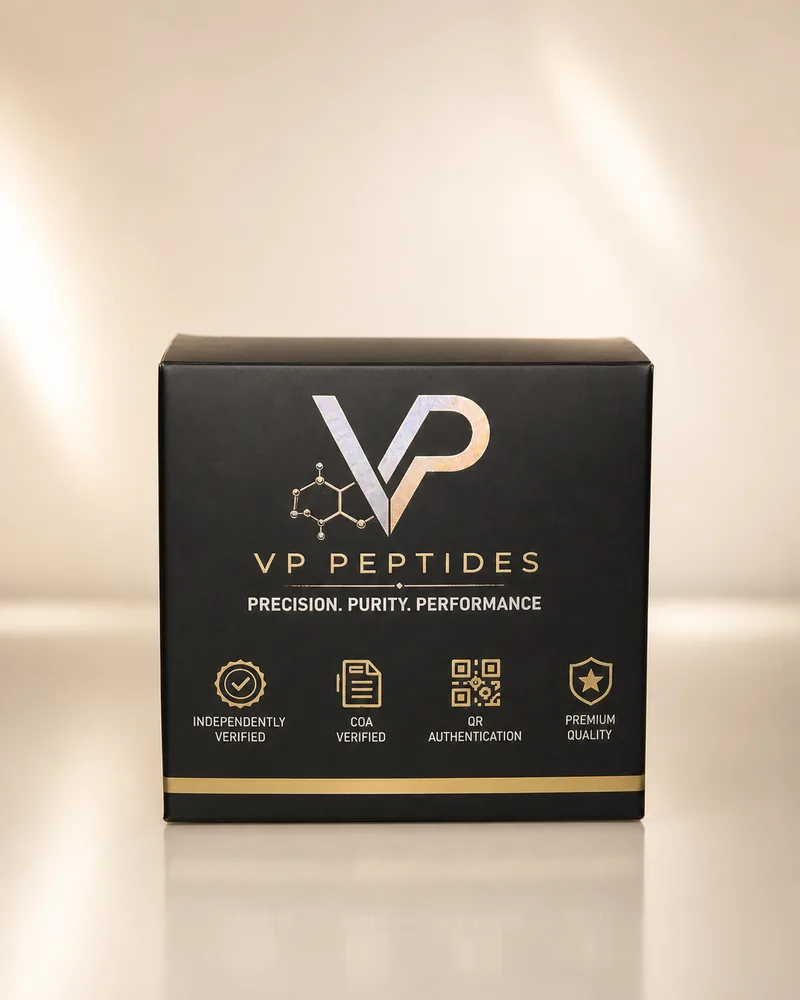
Technical profile
| Compound | Kisspeptin-10 (KP-10) |
|---|---|
| Class | Decapeptide (10 amino acids); C-terminal fragment of the KiSS-1 gene product |
| Sequence | Tyr-Asn-Trp-Asn-Ser-Phe-Gly-Leu-Arg-Phe-NH₂ |
| Receptor target | GPR54, also designated KISS1R — a G-protein-coupled receptor |
| Molecular weight | ~1302.4 g/mol (approximate) |
| Form supplied | Lyophilized powder, sealed vial |
| Storage | Lyophilized: 2–8 °C, protected from light. |
| Verification | HPLC purity ≥99%, sterility, endotoxins, heavy metals — documented on the batch COA |
What does the research literature cover?
Kisspeptin signalling is an established topic in reproductive endocrinology, where the KiSS-1/GPR54 system is studied as an upstream regulator of gonadotropin-releasing hormone. Published research covers:
- GPR54/KISS1R pharmacology: receptor binding, selectivity, and signalling characterisation in cell-based systems, including structure–activity work comparing kisspeptin-10 with longer kisspeptin isoforms.
- GnRH-pulse regulation: preclinical animal-model studies examining kisspeptin-expressing neuronal populations and their role in the pulsatile release of GnRH within the hypothalamic–pituitary–gonadal axis.
- Investigator-led clinical research: kisspeptin has also been used as an investigational probe in academic, ethics-approved human studies of reproductive-axis physiology, conducted under regulatory oversight with pharmaceutical-grade material — a setting entirely distinct from the supply of research chemicals.
Important context: this section describes the scope of published research on the kisspeptin system. It is not a claim about what the research material supplied here does in humans, and it should not be read as suggesting any human application. Research-grade Kisspeptin-10 has no approved human use in any jurisdiction.
Why purity matters for Kisspeptin-10 research
Kisspeptin-10 carries a C-terminal amide and residues — notably tryptophan and arginine — that make it sensitive to oxidation and to incomplete deprotection during synthesis. Deamidated or truncated species can shift apparent receptor potency by a wide margin in GPR54 assays. Every VP Peptides Kisspeptin-10 batch ships with a Certificate of Analysis documenting ≥99% HPLC purity plus sterility, endotoxin and heavy-metal testing from independent third-party testing.
Request catalog accessFrequently asked questions
Is Kisspeptin-10 approved for human use?
No. Kisspeptin-10 is not approved by the FDA or any other regulatory agency for human use. Its appearance in investigator-led, ethics-approved academic research does not constitute regulatory approval, and it does not apply to research-grade material. The product described here is supplied strictly as a research chemical for in-vitro and laboratory investigation — it is not a drug, supplement, or food ingredient.
What does a Kisspeptin-10 Certificate of Analysis include?
Each batch COA documents HPLC purity (≥99% specification), sterility, endotoxin and heavy-metal screening results, along with batch number and test date.
How should Kisspeptin-10 be stored in the lab?
Lyophilized vials should be kept at 2–8 °C and protected from light. Because the sequence contains oxidation-prone residues, minimising repeated freeze–thaw cycles is common practice.
How does Kisspeptin-10 relate to other kisspeptin isoforms?
The KiSS-1 gene product is processed into peptides of differing lengths that share a common C-terminal region. Kisspeptin-10 is the shortest of these fragments and retains the C-terminal sequence responsible for GPR54/KISS1R engagement, which is why it is frequently chosen as a tool compound in receptor studies.
KISS1R signaling upstream of GnRH
In reproductive-endocrinology research, kisspeptin is characterized as an upstream regulator of the neuroendocrine axis rather than an effector at the gonad. The peptide is the endogenous ligand for KISS1R (also called GPR54), a G-protein-coupled receptor expressed on gonadotropin-releasing hormone (GnRH) neurons of the hypothalamus. Binding is described as engaging Gαq/11 and β-arrestin-dependent intracellular pathways, and the resulting effect on GnRH neurons is reported to be both pre- and postsynaptic: presynaptically the peptide is described as increasing excitatory drive to these neurons, while postsynaptically it is reported to suppress certain potassium currents and activate nonselective cation currents, producing sustained depolarization and increased firing.
Because it sits at this control point, kisspeptin has become a widely used tool for interrogating how the GnRH system is organized. Studies have examined receptor desensitization, internalization and recycling as mechanisms that shape the duration of signaling, and human genetic work identified loss-of-function mutations in the kisspeptin pathway in cases of isolated GnRH deficiency — findings that established the pathway's role in the neuroendocrine control of the reproductive axis and its sensitivity to sex-steroid feedback and metabolic cues.
Kisspeptin is an investigational compound: it has been the subject of human reproductive-physiology research, but it is not an approved drug in any jurisdiction, and material supplied here is a laboratory research reagent only. The summaries above describe published neuroendocrine mechanism and receptor pharmacology; they are not statements about clinical use, and nothing here is a claim regarding fertility or any effect in humans.
Selected research references
- Ibos et al., Biomedicines 2021
- Millar & Babwah, Neuroendocrinology 2015 (KISS1R & the neuroendocrine axis) — PubMed
- Rønnekleiv & Kelly, Adv Exp Med Biol 2013 (kisspeptin excitation of GnRH neurons) — PubMed
- Colledge, Trends Endocrinol Metab 2009 (kisspeptins & GPR54) — PubMed
Related research compounds
Inicio · Catálogo de investigación · Kisspeptin-10
Investigación especializada · Compuesto de investigaciónKisspeptin-10: Descripción para investigación
Perfil técnico
| Compuesto | Kisspeptin-10 (KP-10) |
|---|---|
| Clase | Decapéptido (10 aminoácidos); fragmento C-terminal del producto del gen KiSS-1 |
| Secuencia | Tyr-Asn-Trp-Asn-Ser-Phe-Gly-Leu-Arg-Phe-NH₂ |
| Diana receptora | GPR54, también denominado KISS1R — un receptor acoplado a proteína G |
| Peso molecular | ~1302.4 g/mol (aproximado) |
| Forma suministrada | Polvo liofilizado, vial sellado |
| Almacenamiento | Liofilizado: 2–8 °C, protegido de la luz. |
| Verificación | Pureza HPLC ≥99%, esterilidad, endotoxinas, metales pesados — documentado en el COA del lote |
¿Qué cubre la literatura de investigación?
La señalización de la kisspeptina es un tema consolidado en la endocrinología reproductiva, donde el sistema KiSS-1/GPR54 se estudia como regulador anterógrado de la hormona liberadora de gonadotropina. La investigación publicada abarca:
- Farmacología de GPR54/KISS1R: caracterización de la unión al receptor, la selectividad y la señalización en sistemas celulares, incluidos trabajos de relación estructura–actividad que comparan la kisspeptina-10 con isoformas de kisspeptina más largas.
- Regulación de los pulsos de GnRH: estudios preclínicos en modelos animales que examinan las poblaciones neuronales que expresan kisspeptina y su papel en la liberación pulsátil de GnRH dentro del eje hipotálamo-hipófisis-gonadal.
- Investigación clínica dirigida por investigadores: la kisspeptina también se ha utilizado como sonda en investigación en estudios académicos en humanos, aprobados por comités de ética, sobre la fisiología del eje reproductivo, realizados bajo supervisión regulatoria con material de grado farmacéutico — un contexto completamente distinto del suministro de productos químicos de investigación.
Contexto importante: esta sección describe el alcance de la investigación publicada sobre el sistema de la kisspeptina. No es una afirmación sobre lo que hace en humanos el material de investigación suministrado aquí, y no debe interpretarse como una sugerencia de ninguna aplicación humana. El Kisspeptin-10 de grado investigación no tiene uso humano aprobado en ninguna jurisdicción.
Por qué importa la pureza en la investigación con Kisspeptin-10
Kisspeptin-10 lleva una amida C-terminal y residuos — en particular triptófano y arginina — que lo hacen sensible a la oxidación y a la desprotección incompleta durante la síntesis. Las especies desamidadas o truncadas pueden desplazar por un amplio margen la potencia aparente del receptor en los ensayos de GPR54. Cada lote de Kisspeptin-10 de VP Peptides se envía con un Certificado de Análisis que documenta una pureza HPLC ≥99% más pruebas de esterilidad, endotoxinas y metales pesados por parte de terceros independientes.
Solicitar acceso al catálogoPreguntas frecuentes
¿Está Kisspeptin-10 aprobado para uso humano?
No. Kisspeptin-10 no está aprobado por la FDA ni por ninguna otra agencia reguladora para uso humano. Su aparición en investigación académica dirigida por investigadores y aprobada por comités de ética no constituye aprobación regulatoria, y no se aplica al material de grado investigación. El producto aquí descrito se suministra estrictamente como producto químico de investigación para estudio in vitro y de laboratorio — no es un fármaco, suplemento ni ingrediente alimentario.
¿Qué incluye un Certificado de Análisis de Kisspeptin-10?
Cada COA de lote documenta la pureza HPLC (especificación ≥99%), los resultados de esterilidad, endotoxinas y detección de metales pesados, junto con el número de lote y la fecha de análisis.
¿Cómo debe almacenarse Kisspeptin-10 en el laboratorio?
Los viales liofilizados deben mantenerse a 2–8 °C y protegidos de la luz. Dado que la secuencia contiene residuos propensos a la oxidación, es práctica común minimizar los ciclos repetidos de congelación-descongelación.
¿Cómo se relaciona Kisspeptin-10 con otras isoformas de la kisspeptina?
El producto del gen KiSS-1 se procesa en péptidos de distintas longitudes que comparten una región C-terminal común. Kisspeptin-10 es el más corto de estos fragmentos y conserva la secuencia C-terminal responsable de la interacción con GPR54/KISS1R, razón por la cual se elige con frecuencia como compuesto de estudio en investigaciones de receptores.
Señalización de KISS1R aguas arriba de la GnRH
En la investigación de endocrinología reproductiva, la kisspeptina se caracteriza como un regulador aguas arriba del eje neuroendocrino, más que como un efector en la gónada. El péptido es el ligando endógeno de KISS1R (también llamado GPR54), un receptor acoplado a proteínas G que se expresa en las neuronas de hormona liberadora de gonadotropinas (GnRH) del hipotálamo. Se describe que la unión activa vías intracelulares dependientes de Gαq/11 y de β-arrestina, y el efecto resultante sobre las neuronas GnRH se reporta como pre- y postsináptico: presinápticamente se describe que el péptido aumenta el impulso excitatorio hacia estas neuronas, mientras que postsinápticamente se reporta que suprime ciertas corrientes de potasio y activa corrientes catiónicas no selectivas, produciendo una despolarización sostenida y un aumento del disparo.
Por situarse en este punto de control, la kisspeptina se ha convertido en una herramienta ampliamente utilizada para interrogar cómo está organizado el sistema GnRH. Los estudios han examinado la desensibilización, internalización y reciclaje del receptor como mecanismos que modelan la duración de la señalización, y el trabajo genético en humanos identificó mutaciones con pérdida de función en la vía de la kisspeptina en casos de deficiencia aislada de GnRH — hallazgos que establecieron el papel de la vía en el control neuroendocrino del eje reproductivo y su sensibilidad a la retroalimentación de esteroides sexuales y a las señales metabólicas.
La kisspeptina es un compuesto investigacional: ha sido objeto de investigación de fisiología reproductiva en humanos, pero no es un fármaco aprobado en ninguna jurisdicción, y el material suministrado aquí es únicamente un reactivo de investigación de laboratorio. Los resúmenes anteriores describen el mecanismo neuroendocrino publicado y la farmacología del receptor; no son afirmaciones sobre uso clínico, y nada aquí constituye una afirmación relativa a la fertilidad ni a ningún efecto en humanos.
Referencias de investigación seleccionadas
- Ibos et al., Biomedicines 2021
- Millar & Babwah, Neuroendocrinology 2015 (KISS1R y el eje neuroendocrino) — PubMed
- Rønnekleiv & Kelly, Adv Exp Med Biol 2013 (excitación de neuronas GnRH por kisspeptina) — PubMed
- Colledge, Trends Endocrinol Metab 2009 (kisspeptinas y GPR54) — PubMed