Home · Research Catalog · Humanin
Longevity & Cellular Research · Research CompoundHumanin: Research Overview
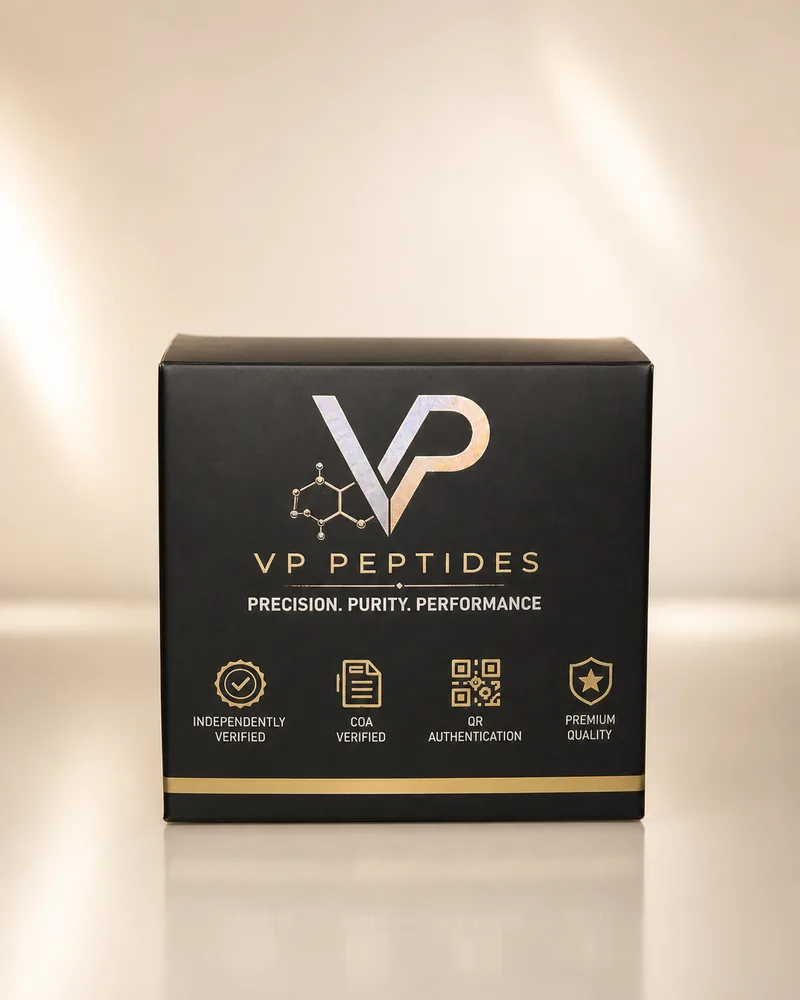
Technical profile
| Compound | Humanin (HN) |
|---|---|
| Class | Mitochondrial-derived peptide (MDP), 24 amino acids |
| Sequence origin | Encoded in the 16S rRNA region (MT-RNR2) of mitochondrial DNA — not the nuclear genome |
| First described | Early 2000s — the first mitochondrial-derived peptide reported in the literature |
| Molecular weight | Not stated here — see the batch Certificate of Analysis for the tested specification |
| Form supplied | Lyophilized powder, sealed vial |
| Storage | Lyophilized: 2–8 °C, protected from light. |
| Verification | HPLC purity ≥99%, sterility, endotoxins, heavy metals — documented on the batch COA |
What does the research literature cover?
Humanin opened the field of mitochondrial-derived peptides: its identification established that the mitochondrial genome encodes short peptides with signaling roles, and later peptides such as MOTS-c were characterised against that precedent. Published work — predominantly cell-culture and animal studies — has examined:
- Cytoprotection: cell-culture models measuring survival of neuronal and other cell types under experimentally applied insults.
- Cellular stress responses: studies of apoptotic signaling, oxidative-stress markers, and mitochondrial stress pathways in treated preparations.
- Receptor and signaling biology: investigations into the cell-surface receptor complexes and downstream pathways through which humanin has been proposed to act.
- Mitochondrial-derived peptide biology: comparative and analogue work, including synthetic humanin analogues used as research tools, and studies placing humanin alongside MOTS-c.
Important context: the humanin evidence base is predominantly preclinical, and mechanistic questions remain open. Humanin has no approved human use in any jurisdiction. Summaries here describe what researchers have studied — they are not claims about effects, safety, or efficacy in humans.
Why purity matters for Humanin research
Peptide research results are only as reliable as the material in the vial. Humanin work often relies on cell-viability and apoptosis readouts, which are precisely the assays most easily distorted by endotoxin contamination or truncated sequences carried through from synthesis. Every VP Peptides Humanin batch ships with a Certificate of Analysis documenting ≥99% HPLC purity plus sterility, endotoxin and heavy-metal testing from independent third-party testing.
Request catalog accessFrequently asked questions
Is Humanin approved for human use?
No. Humanin is not approved by the FDA or any other regulatory agency for human use. It is supplied strictly as a research chemical for in-vitro and laboratory investigation. It is not a drug, supplement, or food ingredient.
Why is Humanin significant in mitochondrial research?
It was the first mitochondrial-derived peptide described, in the early 2000s. That finding established that the mitochondrial genome encodes short peptides beyond the classical respiratory-chain proteins, and it framed the later characterisation of peptides such as MOTS-c.
How should Humanin be stored in the lab?
Lyophilized vials should be kept at 2–8 °C and protected from light.
What does a Humanin Certificate of Analysis include?
Each batch COA documents HPLC purity against the ≥99% specification, sterility, endotoxin and heavy-metal screening results, along with batch number and test date.
A signaling peptide written into mitochondrial DNA
What sets humanin apart from most peptides examined in the laboratory is where its coding sequence sits. The 24-residue peptide is translated from a short open reading frame within the mitochondrial 16S rRNA gene (MT-RNR2), making it one of the first recognized examples of a bioactive peptide encoded by the mitochondrial genome rather than the nucleus. That finding reframed mitochondria as a source of signaling molecules and not only of ATP, and it established the broader category now called mitochondrial-derived peptides (Yen et al., 2013).
In preclinical systems, humanin is studied chiefly as a cytoprotective and stress-response signal. Cell-culture work has characterized its behavior in preparations challenged with oxidative stress and senescence — for example in retinal pigment epithelial cells exposed to experimental oxidative insult (Sreekumar et al., 2016) — and review-level work discusses circulating humanin as a candidate age-associated marker that declines across several species (Yen et al., 2020). Related interest extends to metabolic signaling, where humanin is discussed alongside peptides such as MOTS-c in the context of insulin sensitivity and mitochondrial homeostasis.
Two cautions frame this body of work. The evidence is predominantly preclinical, and central mechanistic questions — receptor identity, physiological concentration range, and translation across species — remain actively debated. Humanin has no approved human use in any jurisdiction. The summaries here describe what investigators have reported in experimental systems; they are not statements about effects, safety, or efficacy in people, and the material supplied is a laboratory reagent only.
Selected research references
- Yen et al., J Mol Endocrinol 2013
- Okada et al., Sci Rep 2017
- Sreekumar et al., Invest Ophthalmol Vis Sci 2016
- Yen et al., Aging 2020
Related research compounds
Inicio · Catálogo de investigación · Humanina
Investigación en longevidad y celular · Compuesto de investigaciónHumanina: descripción general para investigación
Perfil técnico
| Compuesto | Humanina (HN) |
|---|---|
| Clase | Péptido derivado de la mitocondria (MDP), 24 aminoácidos |
| Origen de la secuencia | Codificada en la región del ARNr 16S (MT-RNR2) del ADN mitocondrial — no en el genoma nuclear |
| Descrita por primera vez | Principios de la década de 2000 — el primer péptido derivado de la mitocondria reportado en la literatura |
| Peso molecular | No indicado aquí — consulte el Certificado de Análisis del lote para la especificación analizada |
| Forma suministrada | Polvo liofilizado, vial sellado |
| Almacenamiento | Liofilizado: 2–8 °C, protegido de la luz. |
| Verificación | Pureza HPLC ≥99%, esterilidad, endotoxinas, metales pesados — documentado en el COA del lote |
¿Qué cubre la literatura de investigación?
La humanina abrió el campo de los péptidos derivados de la mitocondria: su identificación estableció que el genoma mitocondrial codifica péptidos cortos con funciones de señalización, y péptidos posteriores como MOTS-c se caracterizaron con ese precedente. El trabajo publicado — predominantemente estudios de cultivo celular y en animales — ha examinado:
- Citoprotección: modelos de cultivo celular que miden la supervivencia de células neuronales y de otros tipos bajo agresiones aplicadas experimentalmente.
- Respuestas celulares al estrés: estudios de la señalización apoptótica, los marcadores de estrés oxidativo y las vías de estrés mitocondrial en preparaciones tratadas.
- Biología de receptores y señalización: investigaciones sobre los complejos de receptores de la superficie celular y las vías posteriores a través de las cuales se ha propuesto que actúa la humanina.
- Biología de los péptidos derivados de la mitocondria: trabajos comparativos y de análogos, incluidos análogos sintéticos de humanina usados como herramientas de investigación, y estudios que sitúan a la humanina junto a MOTS-c.
Contexto importante: la base de evidencia de la humanina es predominantemente preclínica, y quedan abiertas cuestiones mecanísticas. La humanina no tiene ningún uso humano aprobado en ninguna jurisdicción. Los resúmenes aquí describen lo que los investigadores han estudiado — no son afirmaciones sobre efectos, seguridad o eficacia en seres humanos.
Por qué la pureza importa en la investigación con humanina
Los resultados de la investigación con péptidos son tan fiables como el material del vial. El trabajo con humanina depende a menudo de lecturas de viabilidad celular y apoptosis, que son precisamente los ensayos más fácilmente distorsionados por la contaminación por endotoxinas o por secuencias truncadas arrastradas desde la síntesis. Cada lote de humanina de VP Peptides se envía con un Certificado de Análisis que documenta una pureza HPLC ≥99% más análisis de esterilidad, endotoxinas y metales pesados mediante análisis independiente de terceros.
Solicitar acceso al catálogoPreguntas frecuentes
¿Está aprobada la humanina para uso humano?
No. La humanina no está aprobada por la FDA ni por ninguna otra agencia reguladora para uso humano. Se suministra estrictamente como químico de investigación para investigación in vitro y de laboratorio. No es un fármaco, suplemento ni ingrediente alimentario.
¿Por qué es significativa la humanina en la investigación mitocondrial?
Fue el primer péptido derivado de la mitocondria descrito, a principios de la década de 2000. Ese hallazgo estableció que el genoma mitocondrial codifica péptidos cortos más allá de las proteínas clásicas de la cadena respiratoria, y enmarcó la posterior caracterización de péptidos como MOTS-c.
¿Cómo debe almacenarse la humanina en el laboratorio?
Los viales liofilizados deben mantenerse a 2–8 °C y protegidos de la luz.
¿Qué incluye un Certificado de Análisis de humanina?
Cada COA de lote documenta la pureza HPLC frente a la especificación de ≥99%, los resultados del cribado de esterilidad, endotoxinas y metales pesados, junto con el número de lote y la fecha de análisis.
Un péptido de señalización escrito en el ADN mitocondrial
Lo que distingue a la humanina de la mayoría de los péptidos examinados en el laboratorio es dónde se ubica su secuencia codificante. El péptido de 24 residuos se traduce a partir de un marco de lectura abierto corto dentro del gen mitocondrial del ARNr 16S (MT-RNR2), lo que la convierte en uno de los primeros ejemplos reconocidos de un péptido bioactivo codificado por el genoma mitocondrial y no por el núcleo. Ese hallazgo replanteó la mitocondria como fuente de moléculas de señalización y no solo de ATP, y estableció la categoría más amplia que hoy se denomina péptidos derivados de la mitocondria (Yen et al., 2013).
En sistemas preclínicos, la humanina se estudia principalmente como una señal citoprotectora y de respuesta al estrés. El trabajo en cultivo celular ha caracterizado su comportamiento en preparaciones sometidas a estrés oxidativo y senescencia — por ejemplo en células del epitelio pigmentario de la retina expuestas a una agresión oxidativa experimental (Sreekumar et al., 2016) — y el trabajo de nivel de revisión analiza la humanina circulante como un marcador candidato asociado a la edad que disminuye en varias especies (Yen et al., 2020). El interés relacionado se extiende a la señalización metabólica, donde la humanina se analiza junto a péptidos como MOTS-c en el contexto de la sensibilidad a la insulina y la homeostasis mitocondrial.
Dos advertencias enmarcan este conjunto de trabajos. La evidencia es predominantemente preclínica, y quedan cuestiones mecanísticas centrales — la identidad del receptor, el rango de concentración fisiológica y la traducción entre especies — en debate activo. La humanina no tiene ningún uso humano aprobado en ninguna jurisdicción. Los resúmenes aquí describen lo que los investigadores han reportado en sistemas experimentales; no son afirmaciones sobre efectos, seguridad o eficacia en personas, y el material suministrado es únicamente un reactivo de laboratorio.
Referencias de investigación seleccionadas
- Yen et al., J Mol Endocrinol 2013
- Okada et al., Sci Rep 2017
- Sreekumar et al., Invest Ophthalmol Vis Sci 2016
- Yen et al., Aging 2020