Home · Research Catalog · ARA-290
Tissue-Protective / Innate Repair Signaling · Research CompoundARA-290 (Cibinetide): Research Overview
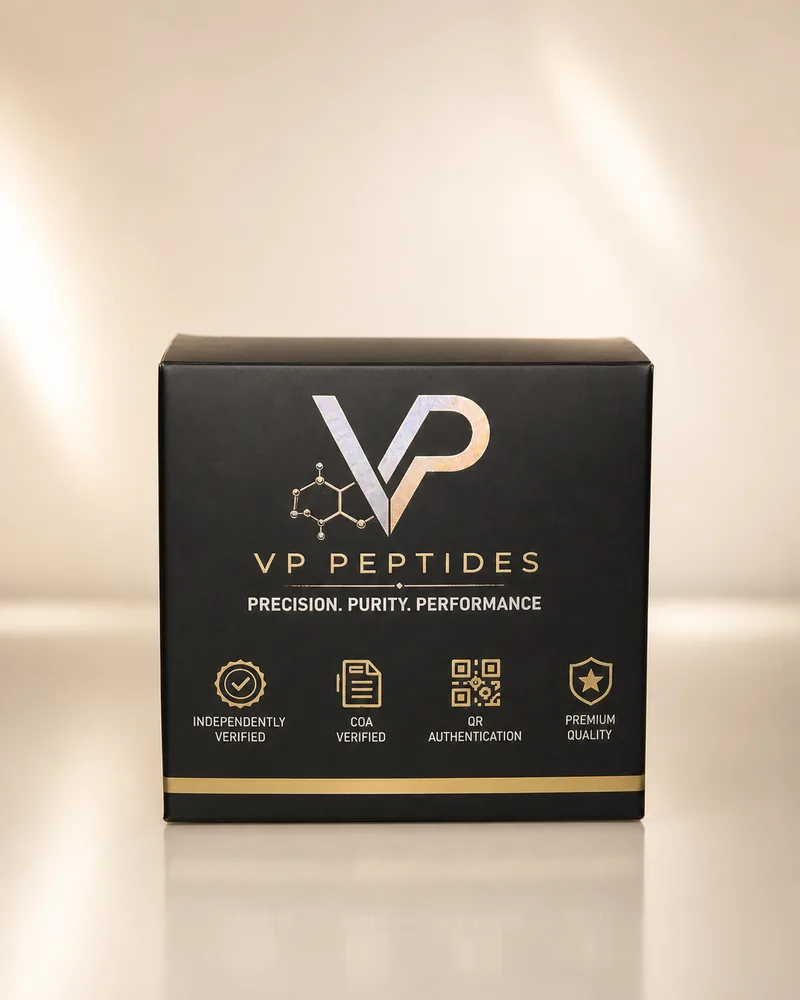
Technical profile
| Compound | ARA-290 |
|---|---|
| Also known as | Cibinetide; pHBSP (pyroglutamate helix B surface peptide) |
| Class | 11-amino-acid synthetic peptide |
| Derived from | The helix B surface region of erythropoietin (EPO) |
| Molecular target | Innate Repair Receptor (IRR) — heterocomplex of EPOR and CD131 / beta-common receptor |
| Molecular formula | C51H84N16O21 |
| PubChem CID | 91810664 |
| Form supplied | Lyophilized powder, sealed vial |
| Storage | Lyophilized: 2–8 °C, protected from light. |
| Verification | HPLC purity — documented on the batch COA (research use only) |
Evidence at a glance
Research evidence is not one category. Human, animal (preclinical) and in-vitro / mechanistic data differ in strength — often sharply. VP Peptides separates them so no single line overstates the whole picture. Ratings are deliberately conservative and describe the published evidence base, not any effect in humans.
- Human efficacy and safety beyond small early-phase trials are not established
- Whether findings in sarcoidosis-associated small-fiber neuropathy or diabetic neuropathy generalize to other conditions is unknown — and should not be assumed
- Long-term safety and adverse-event profile in humans are not characterized
- The identity and purity of any given research-grade material must be verified independently
What the research literature covers
ARA-290 emerged from a specific idea: erythropoietin protects tissues far beyond its familiar role in red-blood-cell production, and that protective signaling can be separated from the hematopoietic one. The published literature is organized around that hypothesis and around the receptor complex — the Innate Repair Receptor — through which the protective signal is proposed to act. Below, human, animal, and mechanistic findings are kept distinct.
Human research
The human evidence base is limited to small, early-phase studies. The most cited is a randomized, double-blind pilot study in patients with sarcoidosis-associated small-fiber neuropathy (roughly 22 participants), which reported changes in neuropathy symptom scores relative to placebo over a short study window. Later work in the same population examined corneal nerve fiber density — a structural, microscopy-based measure of small-fiber integrity — and a separate Phase 2 study explored ARA-290 in the setting of type 2 diabetes, reporting exploratory changes in neuropathic symptom and metabolic measures. These are small studies, exploratory in nature, and do not establish efficacy. They describe what has been investigated, not a demonstrated clinical effect.
Animal and mechanistic research
The preclinical and mechanistic footprint is broader and, for the receptor biology in particular, comparatively strong. Published work spans:
- Receptor pharmacology (in-vitro / mechanistic): characterization of the Innate Repair Receptor as an EPOR–CD131 heterocomplex, and of ARA-290 as an agonist that does not engage the classical homodimeric EPO receptor that drives erythropoiesis.
- Peripheral nerve and neuropathic-pain models: rodent studies of nerve injury reporting long-lasting changes in pain-related behavior alongside suppression of the spinal microglial response.
- Neuroinflammation: models probing anti-inflammatory and cytoprotective signaling in injured neural tissue.
- Renal ischemia/reperfusion and other tissue-protection models: studies of organ injury in which EPO-derived tissue-protective signaling has been examined.
Important context: the bulk of the evidence base is preclinical (cell and animal models) or mechanistic. ARA-290 has no approved human use in any jurisdiction. Summaries here describe what researchers have studied — they are not claims about effects in humans.
Research timeline
This is a map of research progression, not a claim of efficacy. Each stage describes what was investigated.
- Mechanistic foundationCharacterization of the Innate Repair Receptor (EPOR/CD131) and design of an 11-amino-acid peptide modeled on EPO's helix B surface that activates it without stimulating erythropoiesis.
- Preclinical tissue-protection modelsAnimal studies in peripheral nerve injury, neuroinflammation, and renal ischemia/reperfusion examining tissue-protective and anti-inflammatory signaling.
- Early human studiesFirst-in-human and early-phase work assessing tolerability and exploratory endpoints in small cohorts.
- Sarcoidosis small-fiber neuropathy (pilot)Randomized, double-blind pilot study (~22 patients) reporting exploratory changes in neuropathy symptom scores versus placebo.
- Corneal nerve fiber density & diabetic neuropathyFollow-up work on a structural small-fiber measure, and a Phase 2 study in type 2 diabetes — both limited and exploratory.
Why purity matters for ARA-290 research
Peptide research results are only as reliable as the material in the vial. Truncated sequences, deletion impurities, or endotoxin contamination confound experimental outcomes — and for a peptide defined by a precise 11-residue sequence, sequence fidelity is central. Every VP Peptides batch ships with a Certificate of Analysis documenting HPLC purity and identity testing so that laboratories can attribute results to the compound, not to an impurity profile.
Request catalog accessFrequently asked questions
Is ARA-290 approved for human use?
No. ARA-290 (cibinetide) is investigational — it is not approved by the FDA or any other regulatory agency for any indication. It is supplied strictly as a research chemical for in-vitro and laboratory investigation. It is not a drug, supplement, or food ingredient.
Are ARA-290, cibinetide, and pHBSP different compounds?
No — they are three names for the same 11-amino-acid peptide. "Cibinetide" is the international nonproprietary name and "pHBSP" refers to the pyroglutamate helix B surface peptide.
What is the Innate Repair Receptor?
In the published research model, the Innate Repair Receptor (IRR) is a heterocomplex of the erythropoietin receptor (EPOR) and CD131 (the beta-common receptor). ARA-290 is designed to activate this complex, which is associated with tissue-protective signaling, without activating the homodimeric EPO receptor that drives red-blood-cell production.
How should ARA-290 be stored in the lab?
Lyophilized vials should be kept at 2–8 °C and protected from light.
Selected research references
- Heij et al. — Safety and efficacy of ARA 290 in sarcoidosis patients with symptoms of small fiber neuropathy (randomized, double-blind pilot). Mol Med 2012. PMID 23168581.
- Brines et al. — ARA 290, a nonerythropoietic peptide engineered from erythropoietin, improves metabolic control and neuropathic symptoms in type 2 diabetes. Mol Med 2015 (molmed.2014.00215).
- Brines — Discovery of a master regulator of injury and healing: the Innate Repair Receptor. Mol Med 2014 (molmed.2014.00167).
- Swartjes et al. — ARA 290 produces long-term relief of neuropathic pain with suppression of the spinal microglia response. Mol Pain 2014;10:13. PMID 24529189.
- Heij et al. — ARA 290 for treatment of small fiber neuropathy in sarcoidosis. Expert Opin Investig Drugs 2014;23(4). PMID 24555851.
- Culver et al. — Cibinetide improves corneal nerve fiber abundance in sarcoidosis-associated small nerve fiber loss and neuropathic pain. Invest Ophthalmol Vis Sci 2017.
Related research topics
Inicio · Catálogo de investigación · ARA-290
Señalización tisular-protectora / de Reparación Innata · Compuesto de investigaciónARA-290 (Cibinetida): Descripción general de la investigación
Perfil técnico
| Compuesto | ARA-290 |
|---|---|
| También conocido como | Cibinetida; pHBSP (péptido de superficie de la hélice B con piroglutamato) |
| Clase | Péptido sintético de 11 aminoácidos |
| Derivado de | La región de superficie de la hélice B de la eritropoyetina (EPO) |
| Diana molecular | Receptor de Reparación Innata (IRR) — heterocomplejo de EPOR y CD131 / receptor beta-común |
| Fórmula molecular | C51H84N16O21 |
| PubChem CID | 91810664 |
| Forma suministrada | Polvo liofilizado, vial sellado |
| Almacenamiento | Liofilizado: 2–8 °C, protegido de la luz. |
| Verificación | Pureza por HPLC — documentada en el COA del lote (solo para uso en investigación) |
Evidencia de un vistazo
La evidencia de investigación no es una sola categoría. Los datos humanos, animales (preclínicos) e in vitro / mecanísticos difieren en solidez — a menudo de forma notable. VP Peptides los separa para que ninguna línea exagere el panorama completo. Las valoraciones son deliberadamente conservadoras y describen la base de evidencia publicada, no ningún efecto en humanos.
- La eficacia y seguridad en humanos más allá de pequeños ensayos de fase temprana no están establecidas
- Se desconoce si los hallazgos en la neuropatía de fibras pequeñas asociada a sarcoidosis o en la neuropatía diabética se generalizan a otras afecciones — y no debe asumirse
- La seguridad a largo plazo y el perfil de eventos adversos en humanos no están caracterizados
- La identidad y la pureza de cualquier material de grado de investigación deben verificarse de forma independiente
Qué abarca la literatura de investigación
ARA-290 surgió de una idea concreta: la eritropoyetina protege los tejidos mucho más allá de su papel conocido en la producción de glóbulos rojos, y esa señalización protectora puede separarse de la hematopoyética. La literatura publicada se organiza en torno a esa hipótesis y al complejo receptor — el Receptor de Reparación Innata — a través del cual se propone que actúa la señal protectora. A continuación, los hallazgos humanos, animales y mecanísticos se mantienen diferenciados.
Investigación en humanos
La base de evidencia en humanos se limita a estudios pequeños de fase temprana. El más citado es un estudio piloto aleatorizado y doble ciego en pacientes con neuropatía de fibras pequeñas asociada a sarcoidosis (aproximadamente 22 participantes), que reportó cambios en las puntuaciones de síntomas de neuropatía en comparación con placebo durante una ventana de estudio breve. Trabajos posteriores en la misma población examinaron la densidad de fibras nerviosas corneales — una medida estructural, basada en microscopía, de la integridad de las fibras pequeñas — y un estudio de Fase 2 independiente exploró ARA-290 en el contexto de la diabetes tipo 2, reportando cambios exploratorios en medidas de síntomas neuropáticos y metabólicas. Son estudios pequeños, de naturaleza exploratoria, y no establecen eficacia. Describen lo que se ha investigado, no un efecto clínico demostrado.
Investigación animal y mecanística
La huella preclínica y mecanística es más amplia y, para la biología del receptor en particular, comparativamente sólida. El trabajo publicado abarca:
- Farmacología del receptor (in vitro / mecanística): caracterización del Receptor de Reparación Innata como un heterocomplejo EPOR–CD131, y de ARA-290 como un agonista que no activa el clásico receptor homodimérico de EPO que impulsa la eritropoyesis.
- Modelos de nervio periférico y dolor neuropático: estudios en roedores de lesión nerviosa que reportan cambios duraderos en el comportamiento relacionado con el dolor junto con la supresión de la respuesta de la microglía espinal.
- Neuroinflamación: modelos que examinan la señalización antiinflamatoria y citoprotectora en tejido neural lesionado.
- Isquemia/reperfusión renal y otros modelos de protección tisular: estudios de lesión de órganos en los que se ha examinado la señalización tisular-protectora derivada de la EPO.
Contexto importante: la mayor parte de la base de evidencia es preclínica (modelos celulares y animales) o mecanística. ARA-290 no tiene uso humano aprobado en ninguna jurisdicción. Los resúmenes aquí describen lo que los investigadores han estudiado — no son afirmaciones sobre efectos en humanos.
Cronología de la investigación
Este es un mapa de la progresión de la investigación, no una afirmación de eficacia. Cada etapa describe lo que se investigó.
- Fundamento mecanísticoCaracterización del Receptor de Reparación Innata (EPOR/CD131) y diseño de un péptido de 11 aminoácidos modelado sobre la superficie de la hélice B de la EPO que lo activa sin estimular la eritropoyesis.
- Modelos preclínicos de protección tisularEstudios en animales sobre lesión de nervio periférico, neuroinflamación e isquemia/reperfusión renal que examinan la señalización tisular-protectora y antiinflamatoria.
- Primeros estudios en humanosTrabajo de primera administración en humanos y de fase temprana que evalúa la tolerabilidad y criterios de valoración exploratorios en cohortes pequeñas.
- Neuropatía de fibras pequeñas en sarcoidosis (piloto)Estudio piloto aleatorizado y doble ciego (~22 pacientes) que reporta cambios exploratorios en las puntuaciones de síntomas de neuropatía frente a placebo.
- Densidad de fibras nerviosas corneales y neuropatía diabéticaTrabajo de seguimiento sobre una medida estructural de fibras pequeñas, y un estudio de Fase 2 en diabetes tipo 2 — ambos limitados y exploratorios.
Por qué la pureza importa para la investigación de ARA-290
Los resultados de la investigación con péptidos son tan fiables como el material del vial. Las secuencias truncadas, las impurezas por deleción o la contaminación por endotoxinas confunden los resultados experimentales — y para un péptido definido por una secuencia precisa de 11 residuos, la fidelidad de la secuencia es fundamental. Cada lote de VP Peptides se envía con un Certificado de Análisis que documenta la pureza por HPLC y las pruebas de identidad para que los laboratorios puedan atribuir los resultados al compuesto, no a un perfil de impurezas.
Solicitar acceso al catálogoPreguntas frecuentes
¿Está aprobado ARA-290 para uso humano?
No. ARA-290 (cibinetida) es investigacional — no está aprobado por la FDA ni por ninguna otra agencia reguladora para ninguna indicación. Se suministra estrictamente como un producto químico de investigación para estudios in vitro y de laboratorio. No es un fármaco, suplemento ni ingrediente alimentario.
¿Son ARA-290, cibinetida y pHBSP compuestos diferentes?
No — son tres nombres para el mismo péptido de 11 aminoácidos. «Cibinetida» es la denominación común internacional y «pHBSP» hace referencia al péptido de superficie de la hélice B con piroglutamato.
¿Qué es el Receptor de Reparación Innata?
En el modelo de investigación publicado, el Receptor de Reparación Innata (IRR) es un heterocomplejo del receptor de eritropoyetina (EPOR) y CD131 (el receptor beta-común). ARA-290 está diseñado para activar este complejo, que se asocia con la señalización tisular-protectora, sin activar el receptor homodimérico de EPO que impulsa la producción de glóbulos rojos.
¿Cómo debe almacenarse ARA-290 en el laboratorio?
Los viales liofilizados deben mantenerse a 2–8 °C y protegidos de la luz.
Referencias de investigación seleccionadas
- Heij et al. — Safety and efficacy of ARA 290 in sarcoidosis patients with symptoms of small fiber neuropathy (randomized, double-blind pilot). Mol Med 2012. PMID 23168581.
- Brines et al. — ARA 290, a nonerythropoietic peptide engineered from erythropoietin, improves metabolic control and neuropathic symptoms in type 2 diabetes. Mol Med 2015 (molmed.2014.00215).
- Brines — Discovery of a master regulator of injury and healing: the Innate Repair Receptor. Mol Med 2014 (molmed.2014.00167).
- Swartjes et al. — ARA 290 produces long-term relief of neuropathic pain with suppression of the spinal microglia response. Mol Pain 2014;10:13. PMID 24529189.
- Heij et al. — ARA 290 for treatment of small fiber neuropathy in sarcoidosis. Expert Opin Investig Drugs 2014;23(4). PMID 24555851.
- Culver et al. — Cibinetide improves corneal nerve fiber abundance in sarcoidosis-associated small nerve fiber loss and neuropathic pain. Invest Ophthalmol Vis Sci 2017.